CALLBOARD: The Transformative Power of Production: A Conversation on Laowang
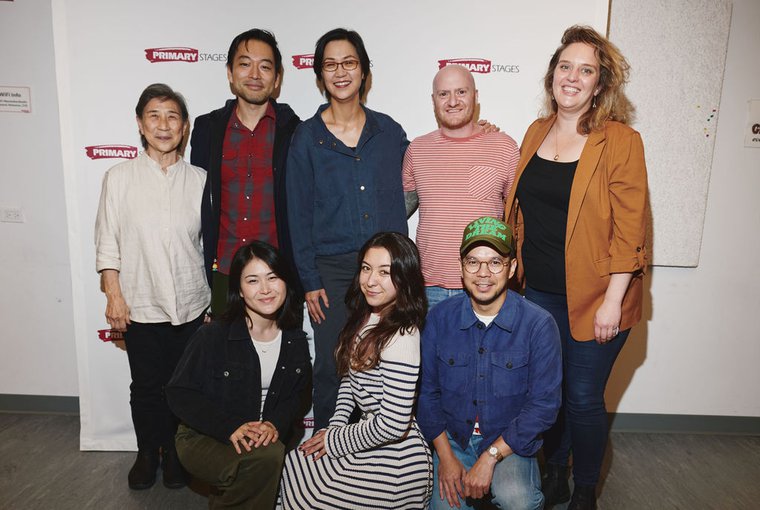
Laowang Playwright Alex Lin and Erin Daley, Artistic Director of Primary Stages
Playwright Alex Lin set out to write a loose adaptation of King Lear, inspired by her family’s restaurant and a desire to craft a leading role for renowned actor Wai Ching Ho. But as the play moved from page to the stage, it evolved into something far more personal: a story about grief, memory, and what we keep when the people we love start to fade. In conversation with Primary Stages Artistic Director Erin Daley, Lin reflects on the process of developing the show and how the audience has transformed both her writing and understanding of her own story.
Read their conversation:
Erin Daley: One of the things that has come up during the Laowang process reminds me of Casey Childs’ original impetus for founding Primary Stages. He believed playwrights truly learn about their work not through endless readings, but by seeing it in front of an audience. I’ve never felt that more strongly than with this show.
Alex Lin: Absolutely. When I started writing Laowang, it was more of a Lear adaptation inspired by my family’s restaurant. I mostly wrote it because I wanted to give Wai Ching Ho a leading role that she could really fill out and show all the amazing things she could do.
But I think what Casey said is so right. You're learning about the play by doing it in production, but you're also learning about the real reason that you wrote the play, or maybe what it actually means to you. And I think now, more clearly than ever, this play is about how I feel about my grandfather's dementia.
It sounds like therapy almost, both for you and the audience.
Exactly. Not to say theater should replace therapy, but this process helped me face something I buried. Luckily I have a good enough relationship with our director, Josh, that I could talk about it with him, honestly, and he could also relate with his own family experience.
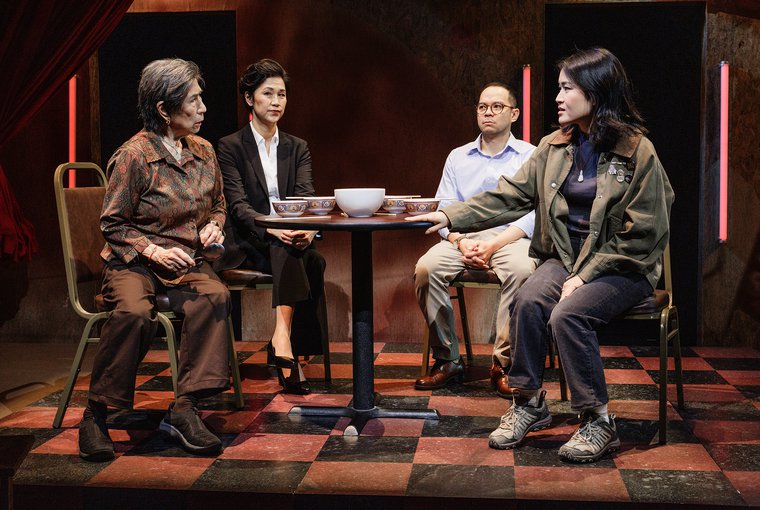
And that’s what Laowang does so beautifully. You see an elder losing her memories, but also all the history disappearing with her. All the stories she didn’t tell her grandchildren. At the end, you’re left with a person in a chair, looking blank, and the realization of everything that’s gone.
Right. That line about legacy, how it’s about what we still have left, how we choose to keep them, means so much to me. Even when the person is gone - their recipes, their stories, their handwriting… they’re pieces of them we can hold onto.
You’ve developed this play through multiple workshops. What was the thing that opened the show up more for you in production versus a reading or workshop?
You have to actually see it happen in front of you. Even in a reading you're kind of just hearing it, the actors are still at music stands. You're hearing all the stage directions read. There's something about actually seeing the full play in its entirety with lights, with sound, with all the other technical elements. When you could see the entire vision of it, it actually clarifies a lot.
Because you’re writing for other people, not just for yourself. Where in a reading or in a workshop, you're just trying to make sure that you’re able to express yourself and your thoughts in the most authentic, full way. And then getting into production, you have to think if other people can understand it in the way you want them to.
That’s totally what’s at the heart of it. Sometimes as an artist you can feel like, “Well this is what I want to say and I should just say it how I want to say it.” But at the end of the day, what kind of effect can you actually have with your work if people don’t get it?
I really want the audiences who see these previews to know how important they are to the process. Because you laughed at a line, or because you were really locked in or because you didn't laugh at that line, the play has changed. Your presence and attention has affected every single subsequent production.
Previews are the most important part of the process because these are real audiences who have not been on the inside of it for weeks upon weeks, giving you their organic, real response to what you’ve written. And that is the most authentic response you can possibly get.
How will this experience influence your writing going forward?
I’ll probably be more about conscious of how to not torture the actors with insane quick changes, but most importantly I really think this process has made me feel affirmed in my growing philosophy of playwrighting, which is even if it’s not about you, it is about you. So what are you actually talking about? And what is the most honest, authentic way to say it?
So many lines in the play were things I’ve actually felt, and it was kind of scary to do that. But I’m sure there’s so many other people that feel the same way and are afraid to say it, too. And maybe, if I can say it through the vessel of this imaginary person, it’ll help not only the play but also the people who come watch it.
Laowang runs from November 1 - December 14, 2025. More info here.
This interview has been edited for grammar and clarity.
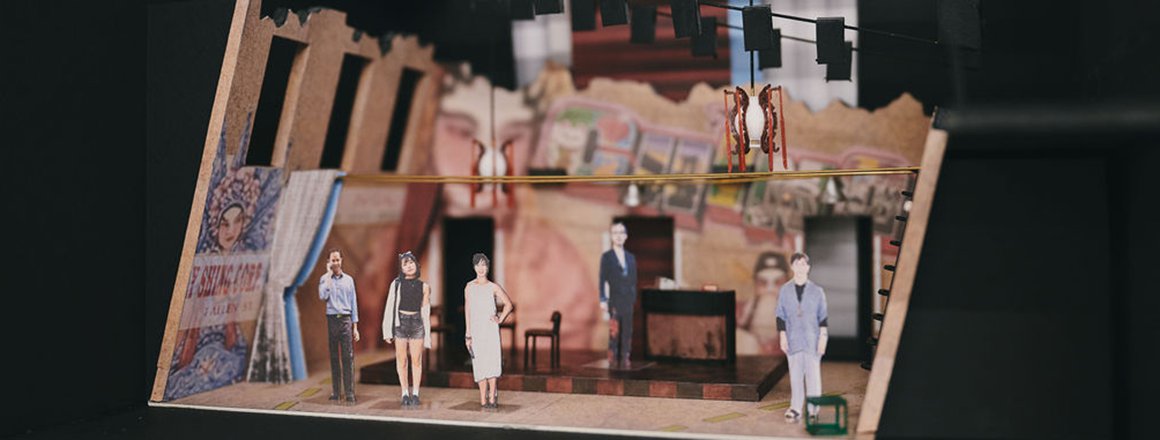
Header image: Model of the Laowang set designed by Wilson Chin. Photo by Valerie Terranova.